Beneath the Monsoon Sky: Harvesting Hay and Alfalfa in the Imperial Valley
Summer in the Imperial Valley is a season of extremes. The sun rises over the desert and quickly begins heating the fields, roads, canals, and communities scattered across the Valley floor. By midday, the air can feel heavy and almost motionless. Heat shimmers above the pavement, distant buildings appear to waver, and the surrounding mountains fade behind a pale curtain of dust and haze.
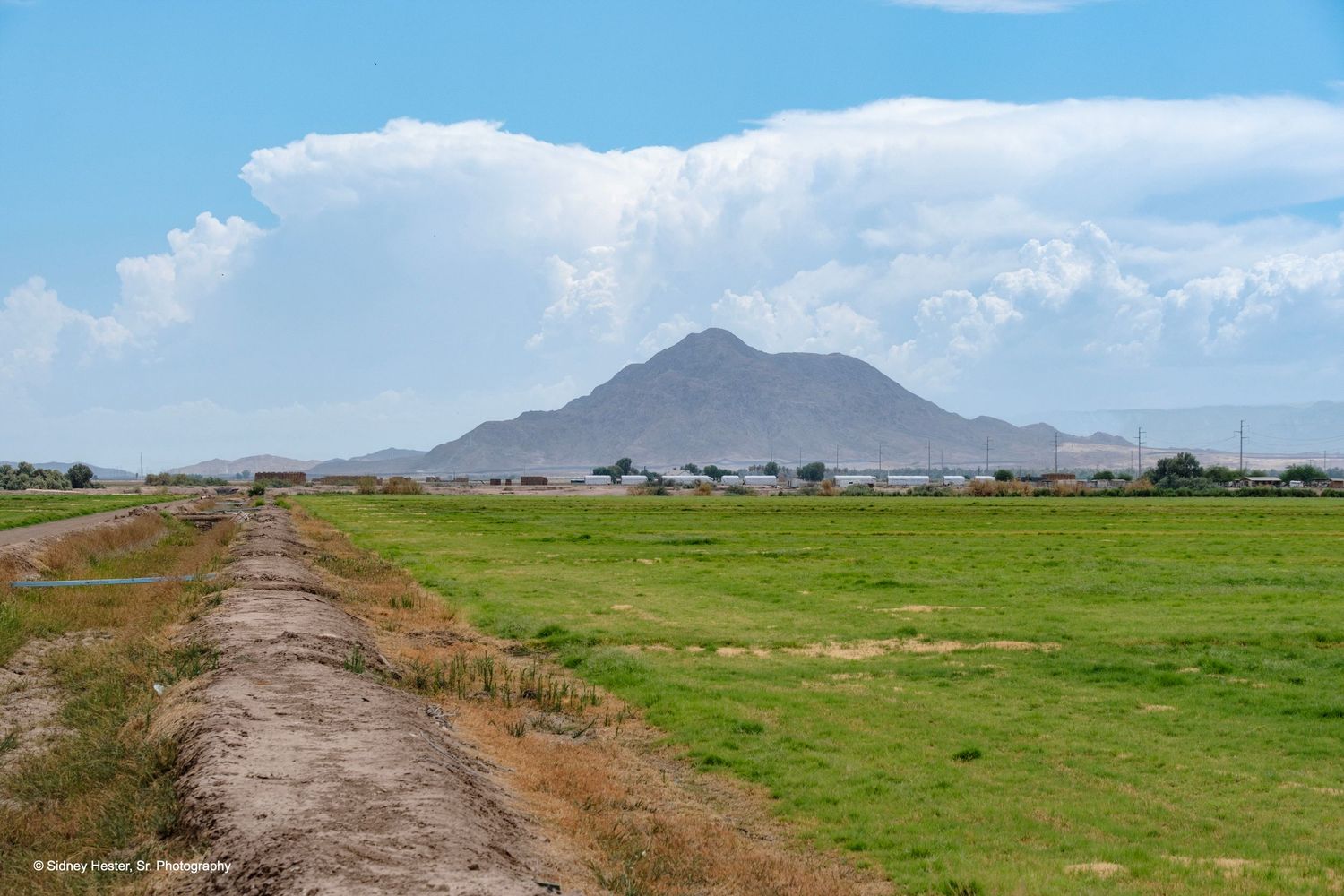
Yet in the middle of this harsh desert landscape, broad fields of green alfalfa stretch toward the horizon.
The contrast is one of the defining sights of the Imperial Valley. Beyond the fields are dry mountains, open desert, and sunbaked soil. Within the agricultural areas, however, irrigation water supports a productive farming region where crops continue to grow despite some of the most demanding summer conditions in California.
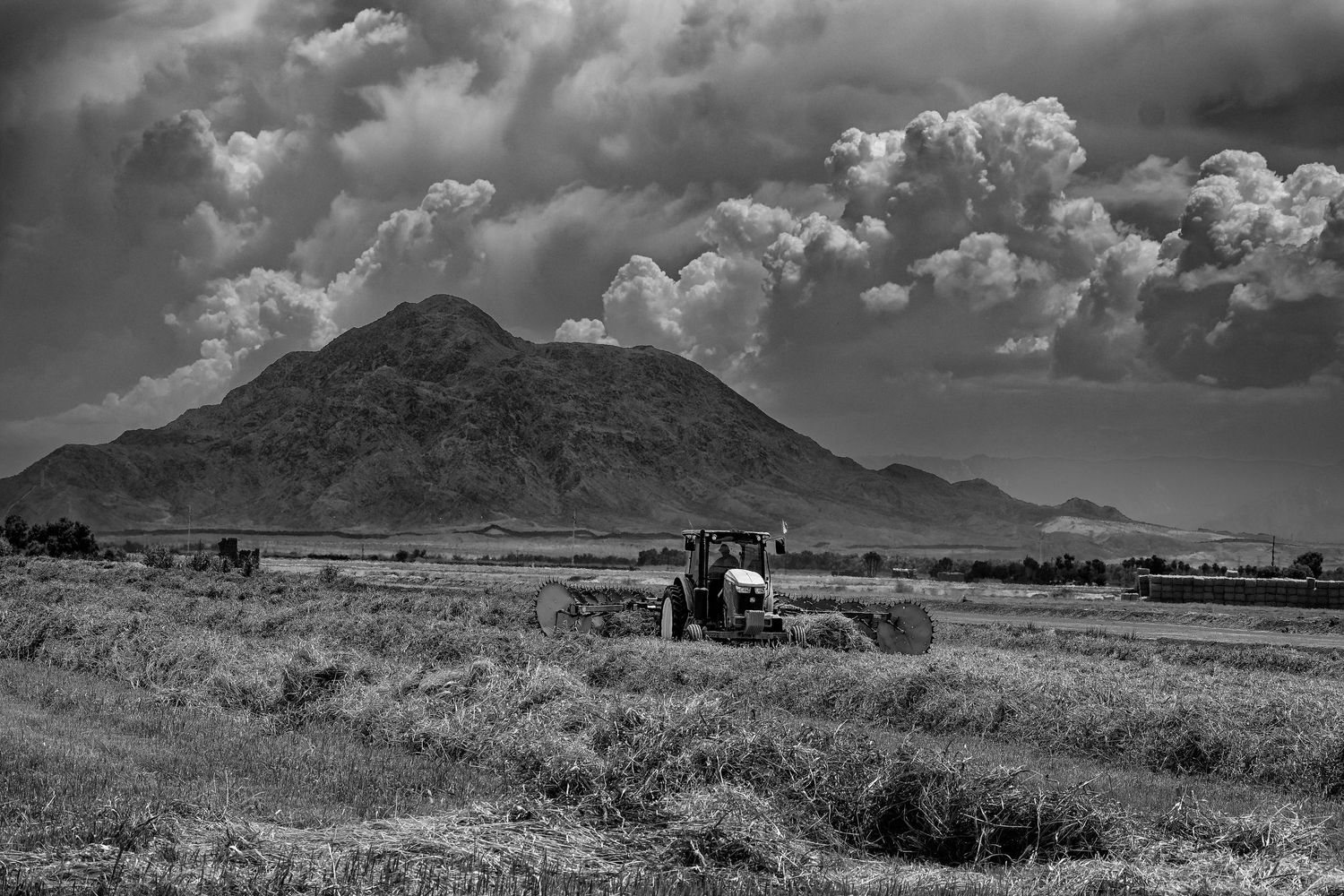
During the summer monsoon season, another element is added to this landscape. Moisture begins moving into the region, humidity rises, and enormous clouds form over the mountains. Their arrival changes the appearance and atmosphere of the Valley. The sky becomes active, dramatic, and unpredictable just as farmers are cutting, drying, raking, and baling their alfalfa.
It is where weather, agriculture, machinery, and human endurance come together.
When the Summer Sky Begins to Change
For much of the year, the sky over the Imperial Valley is clear, bright, and intensely blue. Clouds may be scarce for days or even weeks. During the summer monsoon season, however, moisture moving into the deserts of the Southwest creates conditions that can produce towering clouds and scattered thunderstorms.
The word “monsoon” is sometimes used as another name for heavy rain, but it actually refers to a seasonal change in wind patterns. During the summer, those changing winds can carry moisture northward into southeastern California. When the moisture combines with extreme daytime heating and rising air over the mountains, clouds begin to grow.
Small clouds may appear over the distant ranges during the late morning. As the afternoon progresses, they can build upward into enormous cumulus formations. Their brilliant white tops rise high above the dark mountains, while their bases become increasingly gray and heavy.
Under the right conditions, these clouds may develop into thunderstorms capable of producing lightning, strong winds, blowing dust, brief downpours, and localized flooding. Sometimes a visible curtain of rain falls over the mountains or desert but evaporates before reaching the ground. At other times, a storm releases a sudden burst of rain over one community or agricultural area while nearby fields remain dry.
That unpredictability is part of the monsoon season. A person can stand beneath a blue sky and still see a thunderstorm developing only a few miles away.
The clouds bring a welcome visual break from the endless summer blue, but they also bring uncertainty—especially for farmers with hay drying in the fields.
Alfalfa in the Desert
Alfalfa is one of the crops most closely associated with agriculture in the Imperial Valley. Its green fields stand out sharply against the tan desert soil and rocky mountains surrounding the region.
Growing alfalfa here is possible because of a carefully managed irrigation system. Water is delivered through a network of canals, laterals, gates, and field ditches. That water transforms desert ground into productive farmland capable of supporting repeated growth and harvest cycles.
Alfalfa is a perennial crop, meaning it does not need to be replanted after every harvest. Once established, the plants regrow from their crowns after they are cut. The Imperial Valley’s long growing season and abundant sunshine allow farmers to harvest a field several times during the year.
Each harvest is commonly called a “cutting.” The time between cuttings can vary depending on the season, temperature, condition of the crop, irrigation schedule, and intended use of the hay. During the intense summer, growth can be rapid, but the plants and the people working around them must endure extreme heat.
From a distance, an alfalfa field may appear simple and peaceful. Up close, it represents months of planning and continual care. Farmers must consider irrigation timing, insects, weeds, soil conditions, equipment readiness, weather patterns, labor, and the market for the finished hay.
The harvest itself is only one part of a much larger agricultural process.
Cutting the Field
When the alfalfa reaches the proper stage of growth, machinery moves across the field and cuts the plants close to the ground. The freshly cut crop is placed in rows or spread across the surface so it can begin drying.
The appearance of the field changes immediately. A dense area of green growth becomes a patterned landscape of cut hay, exposed soil, and long parallel lines created by the machinery. The scent of freshly cut alfalfa rises into the hot air—a familiar agricultural fragrance that many longtime Valley residents recognize instantly.
Cutting must be timed carefully. If the alfalfa is harvested too early, the total yield may be reduced. If it is allowed to mature too long, the hay may become coarser and lose some of its nutritional quality. Farmers balance the quantity of hay against the quality needed by the people and livestock operations that will eventually use it.
Once the crop is cut, another clock begins to run. The hay must lose enough moisture to be safely baled, but it should not remain exposed so long that excessive heat, sun, wind, or unexpected rain damages it.
Drying Beneath the Summer Sun
The Imperial Valley’s summer heat can help hay dry quickly, but drying is more complicated than simply leaving it beneath the sun. The goal is to reduce the moisture to an appropriate level while preserving as much of the crop’s color, leaves, and nutritional value as possible.
The leaves are especially important because they contain much of the alfalfa’s feeding value. If the hay becomes overly dry and brittle, those leaves can break away during raking and baling. If the hay remains too wet, it can spoil after being compressed.
Humidity also matters. During a dry period, the hay may lose moisture rapidly in the afternoon heat. When monsoonal moisture enters the region, the air can become noticeably more humid. Drying may slow, and farmers must adjust their schedules accordingly.
A small amount of natural moisture can sometimes make the hay more flexible and reduce leaf loss during handling. Too much moisture, however, creates serious problems. Hay baled before it has dried sufficiently can develop mold, lose quality, and generate heat inside the bale. In extreme circumstances, excessive internal heating can create a fire hazard.
Farmers and equipment operators therefore pay close attention to moisture conditions. Experience, weather information, and modern testing equipment help determine when the hay is ready for the next stage.
Raking the Alfalfa into Windrows
After the cut alfalfa has dried sufficiently, it is gathered into long rows known as windrows. A tractor pulling a rake moves steadily across the field, lifting and combining the loose hay.
The raking process creates the orderly lines that are so familiar in harvested fields. Those lines are not merely decorative. They concentrate the hay into a form that the baler can collect efficiently.
Raking must be done with care. If the hay is too dry, the movement can cause valuable leaves to shatter and fall to the ground. If it is too damp, moisture may become trapped within the windrow. Operators must choose a time when the hay is flexible enough to handle but dry enough to continue toward baling.
As the tractor passes, dust rises behind the machinery. Birds often circle overhead or follow across the field, searching for insects and small animals exposed by the harvest. The sound of the diesel engine carries across the open farmland, mixing with the mechanical turning of the rake and the whisper of dry hay being drawn together.
Above it all, the monsoon clouds continue to build.
Racing the Possibility of Rain
Rain is essential to agriculture, but its timing makes all the difference. Water helps the alfalfa grow before cutting. After the crop is lying in the field, however, an unexpected storm may disrupt the harvest.
Rain can flatten windrows, delay drying, wash away nutrients, discolor the hay, and encourage mold if damp conditions continue. Even a brief shower may force a farmer to wait before baling. A heavier storm can significantly reduce the value of a cutting.
This creates a quiet race between the harvest and the weather.
The towering clouds that appear beautiful to a photographer may look very different to the farmer watching them from a tractor. Their direction, growth, and color are closely observed. A darkening cloud base, a sudden cool gust, distant lightning, or the smell of rain can signal that conditions are changing.
Because monsoon storms are scattered, the outcome is never certain. The field may receive rain, or the storm may pass several miles away. Strong outflow winds from a distant thunderstorm may arrive even when no rain falls, stirring dust and sending it across roads and fields.
Farmers cannot control the weather. They can only study it, prepare for it, and make the best decisions possible with the time available.
The Work of Baling
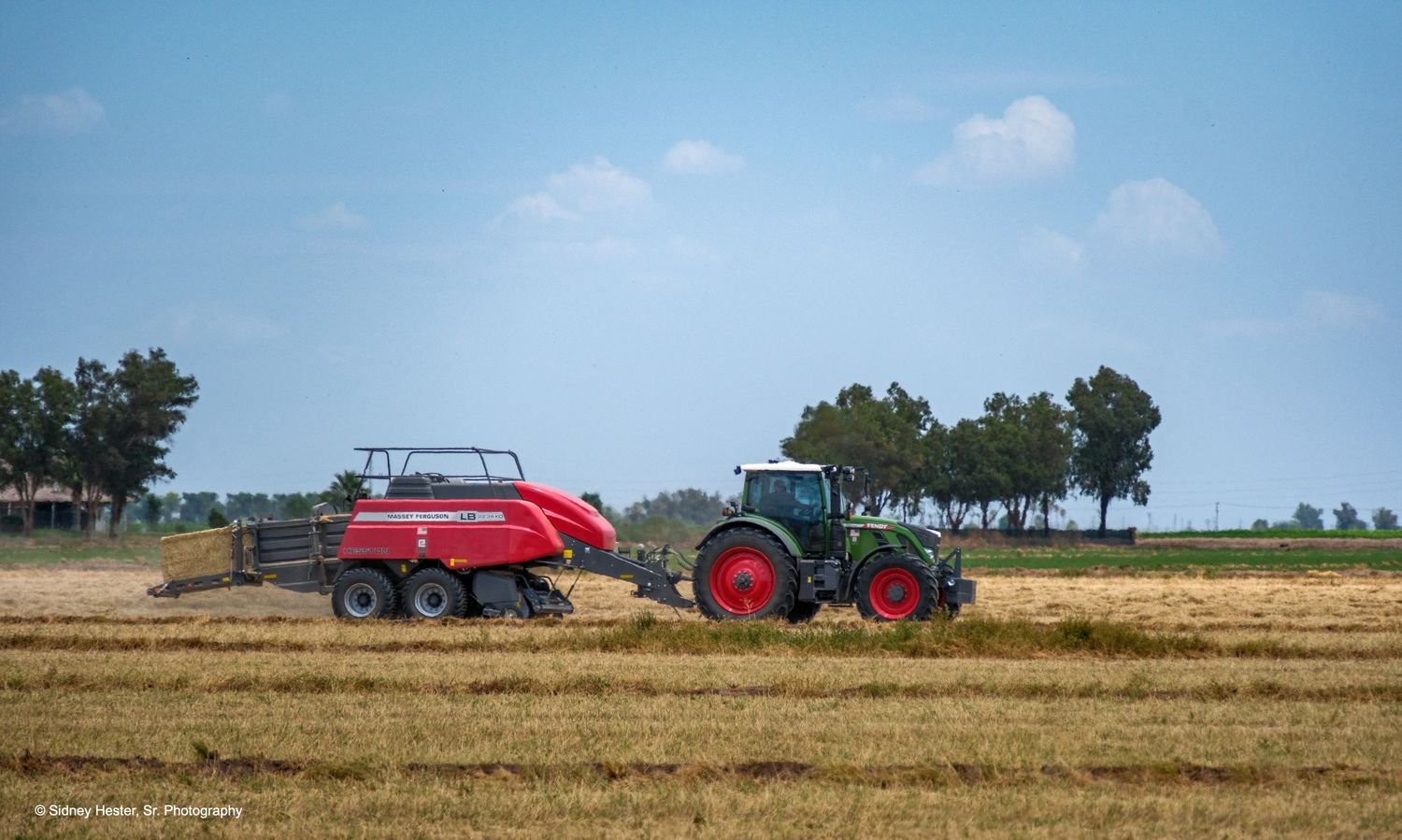
When the hay reaches the proper condition, the baler enters the field and follows the windrows. The machine lifts the loose hay from the ground, feeds it into a chamber, compresses it, and secures it into a tightly formed bale.
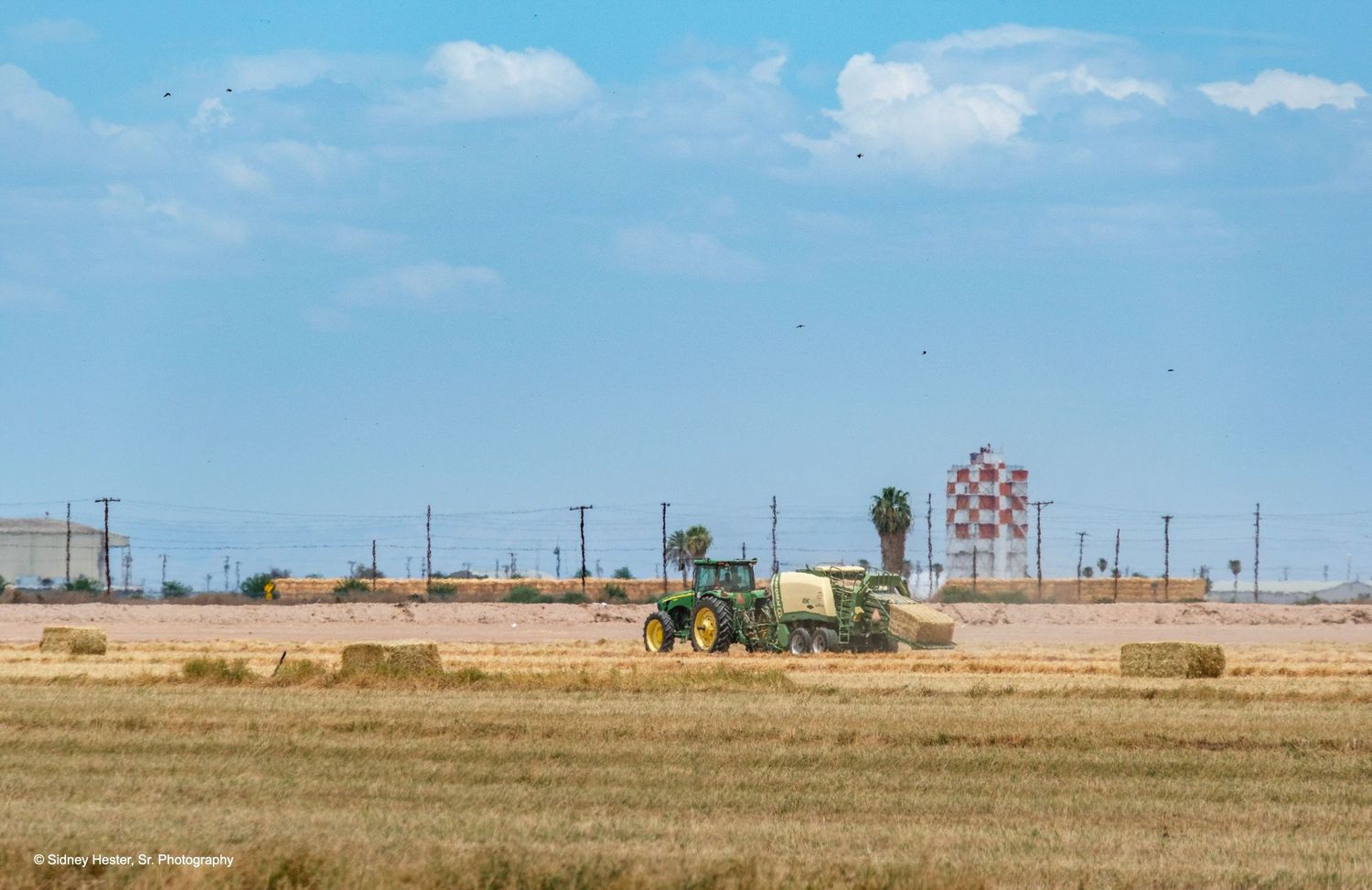
From a distance, the process appears smooth and almost effortless. The tractor moves at a steady pace while finished bales emerge and are placed across the field. Behind that steady movement, however, is a complex mechanical operation that requires careful adjustment and constant attention.
The density and shape of each bale must remain consistent. The equipment must collect the hay cleanly, bind it securely, and continue working despite heat, dust, and plant material. Breakdowns during harvest can be costly, particularly when rain is threatening or the hay has reached the ideal moisture level.
Once released from the baler, the finished bales sit in evenly spaced patterns across the field. They represent the completion of one stage but not the end of the work. The bales must still be collected, stacked, transported, stored, sold, or delivered to their final destination.
Some may remain in large stacks visible from rural roads. Others will be loaded onto trucks and moved to livestock operations within the region or transported beyond the Valley.
Working in Extreme Heat
The machinery may be modern, but farming remains demanding work. Summer temperatures in the Imperial Valley regularly climb well above 100 degrees. Metal equipment becomes dangerously hot, dust works its way into nearly everything, and even a short mechanical repair can become exhausting under the midday sun.
Many agricultural operations adjust their schedules to take advantage of the cooler portions of the day and the most favorable moisture conditions. Work may begin before sunrise or continue after sunset. Tractor lights sometimes move slowly across dark fields while much of the Valley sleeps.
The people who perform this work must remain alert despite long hours and uncomfortable conditions. They monitor machinery, watch the weather, avoid irrigation ditches, and maintain the steady pace required to complete the harvest.
Every finished bale is the product of that labor. It reflects not only the productivity of the land but also the skill and endurance of those who cultivate and harvest it.
A Landscape Filled with Movement
A harvested alfalfa field is never truly still. Tractors cross the rows. Rakes turn the hay. Balers compress it. Trucks arrive to carry it away. Birds move through the air while dust drifts behind the equipment.
In the distance, the mountains remain fixed against the horizon, appearing dark and solid beneath the enormous clouds. Canals and field roads create lines across the Valley floor. Palm trees, utility poles, haystacks, farm buildings, and water towers mark the places where rural agriculture meets the surrounding communities.
Heat waves bend the light, causing distant objects to shimmer. Colors change throughout the day. Early morning may bring soft gold across the fields, while the midday sun produces hard shadows and bright highlights. Late afternoon deepens the color of the hay and gives greater shape to the clouds.
When photographed in black and white, the same landscape takes on a different character. The mountains become heavier, the machinery more pronounced, and the clouds more imposing. Without color, attention shifts toward texture—the rough hay, the patterned field, the steel equipment, and the layered formations in the sky.
The Rhythm of the Imperial Valley
Agriculture in the Imperial Valley follows a rhythm created by water, soil, weather, machinery, and human judgment. Irrigation encourages new growth. The crop matures. The field is cut. The hay dries. Rakes form the windrows. Balers gather the harvest. Then irrigation eventually returns, and the alfalfa begins growing again.
The monsoon season adds uncertainty to that rhythm, but it also adds beauty.
Towering clouds rise beyond the fields and mountains. Rain falls in isolated places. Thunder rolls across the desert. Wind carries the scent of wet earth into communities that may not have received a single drop. Beneath that dramatic sky, farmers continue doing the work that has shaped the Imperial Valley for generations.
The clouds may command our attention, but the harvest below tells the deeper story. It is a story of planning and patience, of risk and perseverance, and of people working in partnership with a difficult but remarkably productive landscape.
Summer in the Imperial Valley is more than heat. It is the sight of green alfalfa against the desert, the sound of machinery moving through the fields, and the appearance of finished hay bales beneath a sky filled with possibilities.
It is the season of the monsoon—and the season of the harvest.